










































































Mixed Function Arguments in x86-64 Assembly – Integers & Floats Explained

Mixed Function Arguments in x86-64 Assembly – Integers & Floats Explained

In the System V x86-64 ABI, integer and floating-point arguments use separate register assignment sequences. Integer arguments go into rdi, rsi, rdx, rcx, r8, r9 (then stack), while floating-point arguments use xmm0 through xmm7 independently. This means the first integer you see — even if it appears after several doubles — always goes into rdi, and the second float always goes into xmm1 regardless of how many integers came before it.
x86-64 Assembly Pointers & Dereferencing Explained – Hybrid C++/YASM Example

x86-64 Assembly Pointers & Dereferencing Explained – Hybrid C++/YASM Example

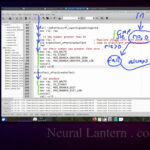
This video explains pointers and dereferencing in x86-64 YASM assembly and demonstrates passing pointers between assembly and C++ in a hybrid program. We show how to read a C string from assembly, modify a long via pointer dereference so the change is visible in C++, and send assembly-owned data (string, long, double) back to C++ using pointers.
x86-64 Assembly While Loops Explained Step by Step in YASM – From Concept to Working Program

x86-64 Assembly While Loops Explained Step by Step in YASM – From Concept to Working Program

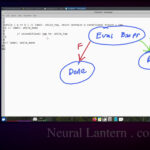
This video teaches how to implement a classic while loop structure in x86-64 assembly language using YASM. We cover the conceptual mapping from C-style while(condition) { body } to assembly labels (while_top, while_body, while_done), conditional jumps (jne, je, etc.), and the unconditional jump back to the top of the loop. A complete runnable example repeatedly reads integers from the user and echoes them until 99 is entered.